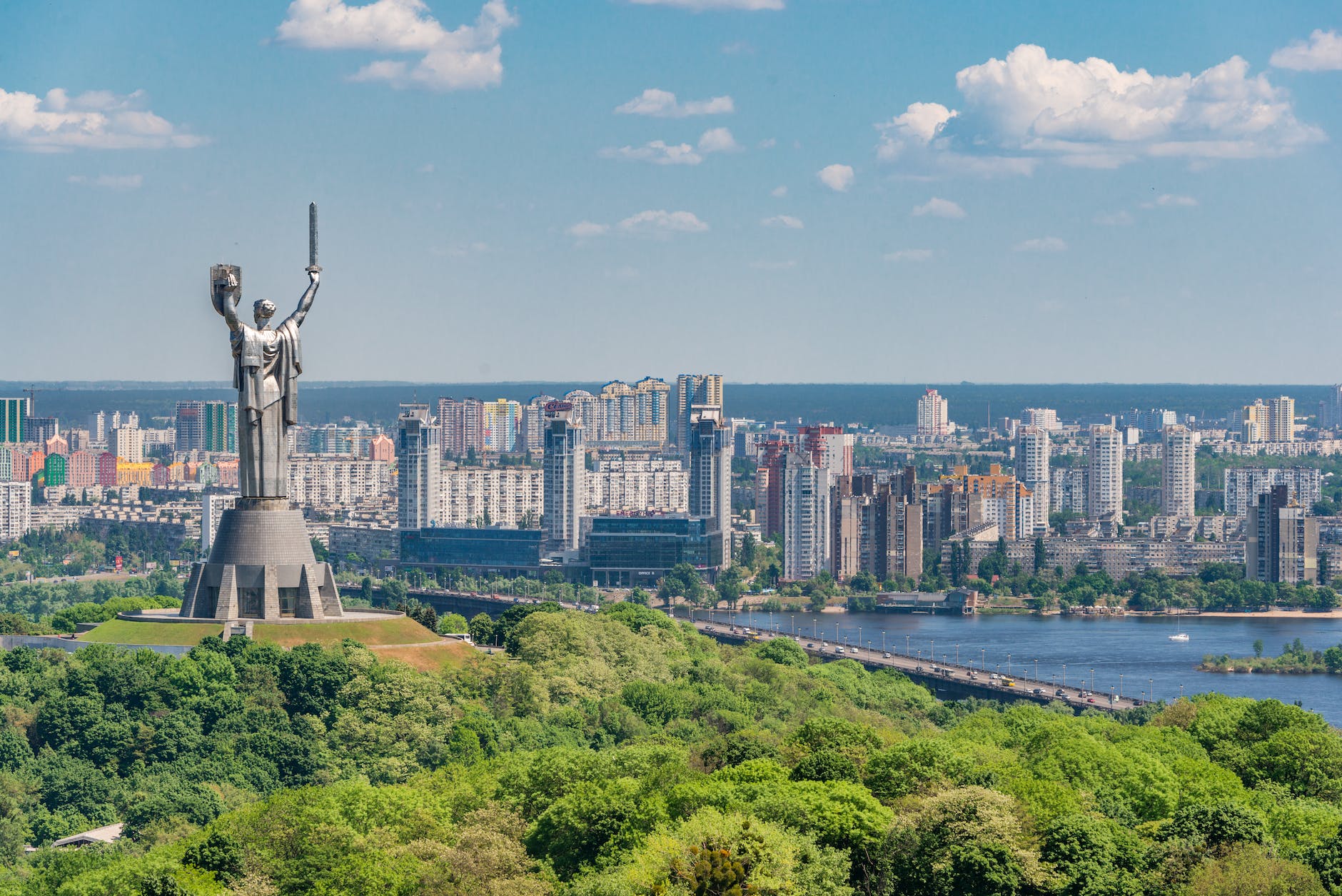
The Ukrainian identity, deeply rooted in a centuries-old legacy, transcends the confines of historical borders, forging a resilient connection between the Ukrainian people and their land. As we journey through the annals of time, we witness the successive waves of occupiers who have left indelible marks on Ukraine and Crimea. From ancient civilizations to medieval empires and beyond, each occupier has contributed to the rich tapestry of Ukrainian history, shaping the cultural mosaic and the collective consciousness of the Ukrainian identity.
The first historical mentions of Ukraine can be traced back to the primary chronicles of the East Slavic tribes, which emerged in the 9th and 10th centuries. The chronicles, such as the Primary Chronicle (also known as the Chronicle of Nestor) and the Hypatian Chronicle, provide crucial insights into the early political and cultural developments in the region. These chronicles attributed the name “Ukraine” (meaning “borderland” or “frontier”) to the vast territories on the periphery of the Kyivan Rus, a medieval East Slavic state centred in Kyiv. The term “Ukraine” highlighted the strategic location of the region and its role as a borderland between various tribes and empires.
During the early medieval period, the Kyivan Rus reached its zenith of power and cultural influence. Kyiv, as the capital of the Kyivan Rus, became a major center of trade, art, and education. The Kyivan Rus encompassed a vast territory, including present-day Ukraine, Belarus, and parts of Russia. Its rulers, known as Grand Princes, such as Volodymyr the Great and Yaroslav the Wise, played pivotal roles in shaping the political and religious landscape of the region.
In the 13th century, the Mongol Empire, under the leadership of Batu Khan, invaded the Kyivan Rus, leading to its fragmentation and the subjugation of Ukrainian lands. The Mongol occupation left a lasting impact on Ukrainian society, influencing political structures, trade routes, and cultural exchanges. Despite Mongol dominance, pockets of autonomy and resistance persisted, particularly in the western territories of Galicia and Volhynia.
During the late medieval era, the Crimean Khanate, an independent state under the suzerainty of the Ottoman Empire, emerged as a significant power in the southern parts of Ukraine, including Crimea. The Crimean Khanate played a prominent role in the Black Sea region, engaging in trade, diplomacy, and conflicts with neighbouring powers. The influence of the Crimean Tatars, the dominant ethnic group in the region, shaped the cultural fabric of Crimea.
In the 16th to 18th centuries, Poland exerted significant influence over parts of Ukraine. The Polish-Lithuanian Commonwealth, a multi-ethnic federation, incorporated western and central Ukraine, including Galicia and Volhynia. This period witnessed intense cultural exchange and political struggles between the Polish nobility and the Ukrainian Cossacks. Figures such as Bohdan Khmelnytsky and Petro Konashevych-Sahaidachny emerged as leaders of the Cossack Hetmanate, leading uprisings against Polish dominance and advocating for Ukrainian autonomy.
It was during this era that Petro Konashevych-Sahaidachny, a renowned Cossack leader, made a significant declaration to the Polish king, Sigismund III Vasa, in the late 16th century. Sahaidachny asserted Ukraine is a nation with its own distinct cultural and political aspirations, highlighting the growing sense of Ukrainian identity and the desire for recognition as a sovereign entity.
The 19th century witnessed significant political and cultural transformations in Ukraine. The Russian Empire, following its annexation of Crimea in 1783, extended its control over most of Ukraine. Russian influence grew, and Ukrainians faced a period of Russification policies aimed at assimilating them into the Russian cultural and political sphere. However, this period also witnessed a flourishing of Ukrainian cultural and literary movements, with prominent figures like Taras Shevchenko contributing to the preservation and revitalization of the Ukrainian language and national identity.
The 20th century brought turbulent times for Ukraine, marked by both independence and subjugation. Following the collapse of the Russian Empire in 1917, Ukraine briefly achieved independence in 1918 but soon faced occupation and territorial divisions by neighbouring powers, including Soviet Russia and Poland. Ukraine endured a series of devastating events, including the Ukrainian Famine of 1932-1933 (known as the Holodomor) and the atrocities committed during World War II.
In the aftermath of World War II, Ukraine became a constituent republic within the Soviet Union, leading to further attempts at cultural assimilation and suppression of Ukrainian identity. However, resistance and nationalistic sentiments persisted, and with the dawn of perestroika and the collapse of the Soviet Union in 1991, Ukraine reclaimed its independence, emerging as a sovereign nation on the world stage.
It is important to recognize that while Crimea may not have been historically part of a unified Ukrainian nation, it holds significant historical ties to the Ukrainian identity. Crimea’s diverse cultural heritage, including its Crimean Tatar population and its historical links to the Kyivan Rus and subsequent Ukrainian statehood, have shaped its place in Ukrainian history.
In a modern context, the historical occupation of Ukraine by various powers does not determine the present legitimacy of Ukraine or its territorial integrity. The Ukrainian people have the right to self-determination and have chosen their own path. The events of the past serve as a reminder of the resilience and unwavering spirit of the Ukrainian people, who continue to forge their own destiny, building a nation based on their shared heritage, cultural diversity, and aspirations for a prosperous future.
The illegitimate annexation or occupation of another nation cannot be justified by historical ownership of certain territories. Any assertions by Russia that Ukraine lacks a historical claim to its lands should be unequivocally condemned. The collapse of the Soviet Union marked a turning point when these regions had the opportunity to determine their own destiny through democratic processes. The choice made by the people in these regions, through legitimate votes, settled the question of their nationhood. Therefore, any attempts to breach the sovereignty of a nation based on historical claims are not only baseless but also absurd.
It is crucial to emphasize that history does not dictate the present. In discussions surrounding Russia’s actions, it is disheartening to witness some individuals in the United States supporting Russia’s claims by citing historical precedents. However, let us ponder this: Does Mexico have a legitimate claim on Texas, California, New Mexico, and Arizona? Do the French possess the right to reclaim large portions of the United States? Should Native American tribes, who were the original owners of these lands, take up arms to reclaim what was unjustly taken from them? The answer to all these questions is a resounding “no.” Therefore, it is clear that Russia has no legitimate claim to even a single inch of Ukrainian land.
In conclusion, historical claims cannot be used as a pretext to infringe upon the sovereignty of a nation. Ukraine’s legitimacy as a nation is unquestionable, and any attempts by Russia to annex or occupy Ukrainian territories based on historical arguments are unfounded and devoid of legitimacy. The international community must stand united in defending Ukraine’s sovereignty and in affirming that the present and future of a nation are determined by the choices and aspirations of its people, not by the historical events of the past.


