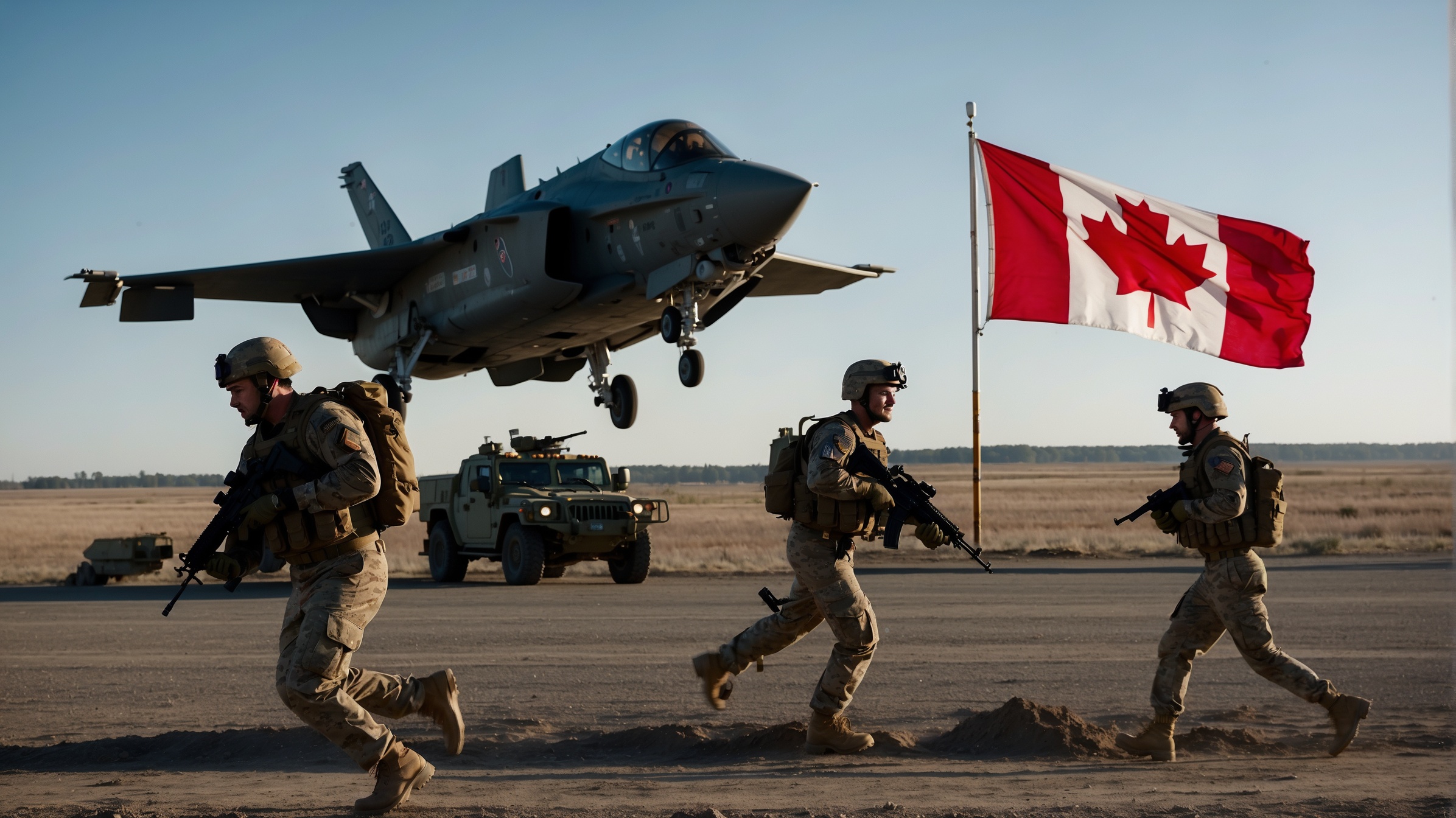
In an era of evolving security challenges and complex geopolitical dynamics, the Canadian Armed Forces (CAF) must continuously adapt and modernize to maintain its effectiveness and readiness for modern warfare.
Recognizing the need to address key weaknesses in critical areas such as air defence, artillery, armoured forces, and anti-tank capabilities, a comprehensive strategy is essential to enhance Canada’s military capabilities and ensure its ability to meet the demands of contemporary security environments.
Development of a New Ground-Based Air Defense System
Canada’s air defence capabilities face significant challenges following the retirement of the Air Defense Anti-Tank System (ADATS) in 2011, leaving the nation vulnerable to modern airborne threats. In response to this pressing concern, a thorough examination of the Canadian Armed Forces (CAF) current capabilities and deficiencies is warranted, along with a strategic proposal to address these weaknesses. This article critically assesses the state of Canada’s air defence and presents a comprehensive strategy, including the evaluation and integration of specialized platforms like the Rheinmetall Oerlikon Skyranger 30 and Mistral MANPADS, to bolster Canada’s ground-based air defence capabilities.
With the retirement of the ADATS system, Canada currently lacks a dedicated ground-based air defence capability, exposing critical gaps in its ability to counter modern airborne threats. This deficiency leaves Canadian airspace and assets vulnerable to potential aerial incursions, including drones, cruise missiles, and low-flying aircraft.
The absence of a robust ground-based air defence system undermines Canada’s overall defence posture and limits its ability to protect vital assets and infrastructure from airborne threats. This vulnerability poses significant risks to national security and necessitates urgent remedial action to enhance Canada’s air defence capabilities.
To address the deficiencies in Canada’s air defence capabilities, a strategic proposal includes the evaluation and integration of specialized platforms like the Rheinmetall Oerlikon Skyranger for Short-Range Air Defense (SHORAD) and the Mistral MANPADS for ground-based air defence roles.
The Skyranger 30 presents a potential solution to Canada’s ground-based air defence requirements. However, while offering advanced features and capabilities, including integrated radar systems and multifunctional missile launchers, its suitability must be critically assessed in the context of Canada’s operational needs, budget constraints, and technological compatibility.
Integrating the Mistral MANPADS into infantry units presents a decentralized approach to ground-based air defence, empowering frontline troops to engage in low-altitude aerial threats effectively. However, concerns regarding training, logistics, and operational deployment must be carefully addressed to ensure the successful integration and utilization of this platform within the CAF.
Addressing Weaknesses in Canada’s Self-Propelled Artillery and Standard Artillery Capabilities
In the realm of ground operations, Canada’s artillery capabilities are indispensable. However, the retirement of the M109 self-propelled howitzers in 2005 left a significant gap in the Canadian Armed Forces’ arsenal. This absence poses grave challenges, particularly in the face of modern threats such as kamikaze-style drones, which have become prevalent in conflict zones like the Russo-Ukraine War. To address this vulnerability, the proposal focuses on reintroducing self-propelled artillery capabilities, specifically platforms like the K9 Thunder and High Mobility Artillery Rocket System (HIMARS), while considering the strategic deployment of the M777 in theatres where the threat of drone attacks is significantly reduced.
The absence of self-propelled artillery since the retirement of the M109 presents operational challenges, especially in countering modern threats like kamikaze-style drones. In dynamic battlefield environments, towed artillery like the M777 is particularly vulnerable due to its visibility and longer setup times. This makes gun crews susceptible to rapid detection and attack by drones, exposing soldiers to heightened risk during operations.
While the M777 towed howitzer remains a capable system, its limitations in mobility, responsiveness, and vulnerability to drone attacks underscore the critical need for the reintroduction of self-propelled artillery capabilities.
Reintroducing self-propelled artillery is imperative to enhance Canada’s artillery capabilities, providing superior mobility, firepower, and protection compared to towed artillery platforms. The K9 Thunder, for instance, offers enhanced survivability for crews by providing armoured protection and increased mobility on the battlefield. Similarly, the HIMARS system offers long-range precision strike capabilities, enabling Canadian artillery units to engage targets with accuracy and effectiveness while minimizing exposure to hostile threats.
Addressing Canada’s artillery vulnerabilities demands a comprehensive strategy that includes reintroducing self-propelled artillery capabilities while strategically deploying towed artillery platforms like the M777 in theatres where the threat of drone attacks is significantly mitigated. By investing in modern artillery systems like the K9 Thunder and exploring options like the HIMARS, Canada can bolster its firepower, mobility, and resilience on the battlefield, ensuring the effective support of ground forces in an evolving security landscape dominated by modern threats such as kamikaze-style drones.
Revolutionizing Canada’s Armoured Forces and Mechanized Ability
In reimagining the composition of Canada’s armoured forces, there is a compelling argument for a bold shift away from traditional main battle tanks (MBTs) in favour of a more agile and versatile approach centred around mobile gun systems (MGS) and infantry fighting vehicles (IFVs). This proposal seeks to explore the advantages of this paradigm shift and delve into the expanded capabilities offered by a diversified fleet of LAVs (Light Armored Vehicles), including variants inspired by successful platforms like the German Hummel.
MBTs have long been the backbone of armoured forces, revered for their formidable firepower and armour. However, in the context of modern warfare, characterized by rapid deployments, asymmetrical threats, and diverse operational environments, MBTs present significant limitations. Their size, weight, and fuel consumption make them cumbersome and less adaptable to the fast-paced nature of contemporary conflicts.
Furthermore, the cost of procuring, maintaining, and operating MBTs is considerable, diverting resources away from other critical defence priorities. By transitioning away from MBTs, Canada can redirect these resources towards more agile and versatile platforms better suited to meet the demands of modern warfare.
MGS/IFV systems offer a compelling alternative to MBTs, combining firepower with agility and flexibility. Inspired by successful platforms like the M1128 Stryker MGS, these systems provide potent firepower while retaining the mobility necessary for rapid deployment and maneuverability over long distances.
MGS/IFV systems excel in roles such as fire support, reconnaissance, and urban operations, where their smaller size and enhanced maneuverability enable them to navigate complex terrain and engage enemy forces with precision and speed. Moreover, their modular design allows for easy integration of advanced sensors, communications systems, and weapon systems, enhancing situational awareness and lethality on the battlefield.
To complement the transition away from MBTs, Canada should procure an expanded fleet of LAVs, including variants tailored to specific mission requirements. Drawing inspiration from platforms like the German Hummel, Canadian LAV variants could include:
- Command versions are equipped with advanced communication and command-and-control systems, enabling effective coordination of armoured formations on the battlefield.
- Medical evacuation units are designed to provide timely and efficient medical support to wounded personnel in combat environments.
- Electronic warfare configurations are outfitted with electronic countermeasures and surveillance systems, enhancing the ability to disrupt enemy communications and gather intelligence.
By transitioning away from MBTs in favour of MGS/IFV systems and expanding the LAV fleet with specialized variants, Canada can revolutionize its armoured forces, enhancing agility, versatility, and effectiveness in modern warfare. This strategic approach ensures that Canada’s armoured forces remain adaptable and responsive, capable of meeting the diverse challenges of today’s operational environments while optimizing resource allocation and maintaining a competitive edge on the battlefield.
Enhancing the Anti-Tank Capability of the CAF
Building upon the foundation laid out in previous sections, there is a crucial need to bolster Canada’s anti-tank capabilities to effectively counter modern armoured threats on the battlefield. This proposal advocates for the deployment of M1128-style platforms to provide significant anti-tank firepower directly on the battlefield. Additionally, the CAF should license the production of the Javelin anti-tank missile system by a Canadian manufacturer and invest in the SRAW platform to ensure a well-rounded and potent anti-armour capability for frontline elements.
The adoption of M1128-style platforms offers a compelling solution to enhance anti-tank capabilities on the battlefield. These platforms provide direct and mobile firepower, enabling Canadian forces to effectively engage and neutralize armoured threats in various operational environments. By deploying such platforms, Canada can ensure the presence of significant anti-tank firepower at the frontline, augmenting the overall combat effectiveness of its forces.
Licensing the production of the Javelin anti-tank missile system by a Canadian manufacturer is a strategic move to augment Canada’s anti-tank arsenal. The Javelin’s proven effectiveness and precision make it a valuable asset for engaging priority targets, including heavily armoured vehicles and fortified positions. To facilitate its deployment, each company would be equipped with an anti-tank platoon consisting of eight personnel, each armed with four Javelin missile systems. This ensures a dedicated and readily available anti-tank capability at the company level.
In addition to the Javelin, investing in the Shoulder-Launched Multipurpose Assault Weapon (SRAW) platform provides a cost-effective and versatile anti-armour solution for frontline elements. Each rifle platoon would be equipped with one SRAW, ensuring that every infantry unit could engage enemy armour effectively. This decentralized approach distributes anti-tank firepower throughout the infantry formations, enhancing flexibility and responsiveness on the battlefield.
By deploying M1128-style platforms, licensing the production of the Javelin anti-tank missile system, and investing in the SRAW platform, Canada can significantly enhance its anti-tank capabilities on the battlefield. This strategic approach ensures the presence of significant anti-tank firepower at the frontline while addressing cost and logistical challenges associated with high-end anti-tank systems. By equipping frontline elements with a diverse array of anti-tank weapons, Canada enhances its ability to effectively counter modern armoured threats, safeguarding its forces and achieving operational success in dynamic and evolving conflict environments.
Securing Canada’s Skies: The Imperative for Advanced Air Capabilities
In safeguarding the vast expanse of Canada’s airspace, there exists an urgent need for a modern, adaptable, and resilient air force capable of defending against contemporary threats. The current aging fleet, while once formidable, is being outpaced by adversaries and allies alike. Relying solely on foreign allies to protect Canada’s airspace exposes the nation to unacceptable vulnerabilities. Therefore, the integration of Unmanned Combat Aerial Vehicles (UCAVs) such as the Loyal Wingman alongside advanced manned aircraft like the F-35A is not just advantageous but imperative for Canada’s national security.
Canada’s geographic size and diverse terrain demand an air force that is adaptable and rugged, capable of operating in harsh climates and remote regions. The current fleet, comprised of aging aircraft, lacks the agility and technological sophistication required to effectively respond to evolving threats. By investing in advanced platforms like the F-35A and integrating UCAVs, Canada enhances its ability to conduct aerial operations across its vast territory, ensuring timely and effective response capabilities.
In the face of emerging threats and rapid technological advancements, maintaining air superiority is paramount for Canada’s defence strategy. Adversaries possess increasingly sophisticated air defence systems and next-generation fighter aircraft, posing a significant challenge to Canada’s aging fleet. By modernizing its air force with advanced platforms like the F-35A and leveraging UCAVs, Canada ensures its ability to compete and prevail in contested airspace, deterring potential aggressors and safeguarding national interests.
Relying solely on foreign allies to defend Canada’s airspace introduces unacceptable vulnerabilities. In an era of geopolitical uncertainty and shifting alliances, Canada must maintain an independent and robust air capability to protect its sovereignty and security interests. By investing in advanced aircraft and UCAVs, Canada reduces its reliance on external partners and enhances its ability to defend its airspace autonomously, mitigating the risk of potential threats and ensuring a proactive approach to national defence.
In conclusion, the integration of advanced air capabilities, including manned aircraft like the F-35A and UCAVs like the Loyal Wingman, is not just a strategic option but a necessity for Canada’s national security. The vastness of Canada’s territory, coupled with emerging threats and technological advancements, demands a modern and adaptable air force capable of maintaining air superiority and defending against potential adversaries. By investing in advanced platforms and reducing vulnerabilities, Canada enhances its ability to protect its airspace, safeguard its sovereignty, and uphold its commitments to international security and stability.
A Call to Action: Prioritizing Canada’s Defence
While Canada’s defence needs are clear, the actions of its politicians often fall short of the mark. The current state of affairs, particularly evident in the naval procurement program for new frigates, serves as a stark reminder of the consequences of neglecting essential modernization efforts in favour of costly and ultimately inefficient projects. It is time for Canadian politicians to acknowledge the urgent need for bold, forward-thinking initiatives to revitalize and strengthen the Canadian Armed Forces.
The runaway cost increases and lack of progress in the naval procurement program underscore a troubling trend of mismanagement and misplaced priorities. Instead of investing in projects that enhance Canada’s defence capabilities and ensure the safety and effectiveness of its forces, politicians have focused on costly endeavours with little tangible benefit to national security.
No current party has proposed the type of bold modernization required by the CAF. This failure to prioritize defence modernization not only undermines Canada’s credibility as an international partner but also puts the lives of Canadian soldiers at risk. As the world becomes increasingly uncertain and volatile, Canada must take proactive steps to strengthen its defence capabilities and adapt to emerging threats.
The longer we delay essential modernization efforts, the less capable our forces become. This not only jeopardizes Canada’s ability to fulfill its international obligations but also undermines its ability to protect its citizens and interests at home and abroad. It is time for Canadian politicians to set aside partisan differences and prioritize the security and well-being of the nation by investing in bold, forward-thinking defence initiatives.
In conclusion, Canada’s defence cannot afford to be treated as an afterthought or a political bargaining chip. The time for action is now. Canadian politicians must demonstrate leadership and vision by committing to bold modernization efforts that will ensure the strength, readiness, and effectiveness of the Canadian Armed Forces for generations to come. The safety and security of Canada and its citizens depend on it.

 Layman's Terms