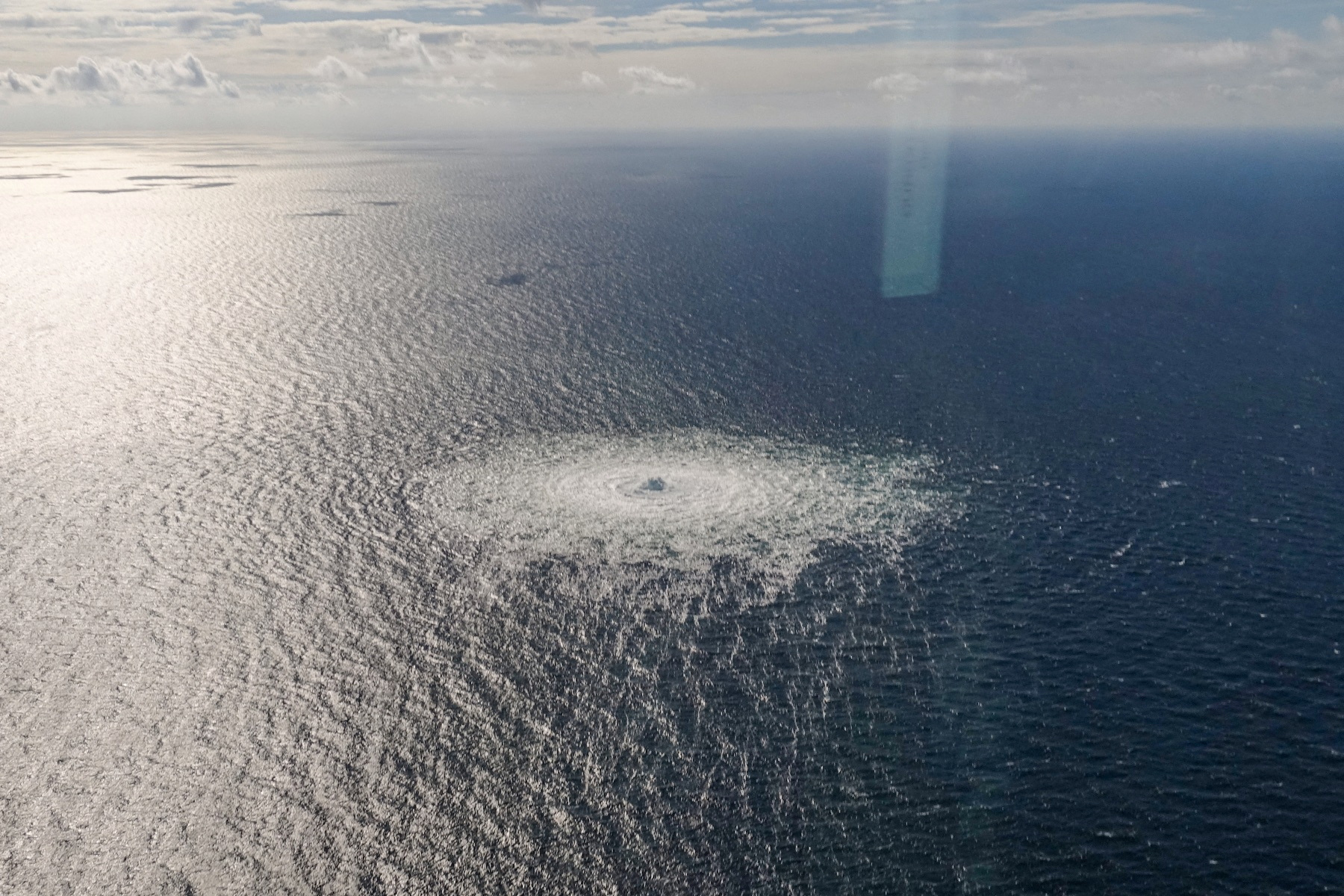
Everyone is talking about the explosions on the Nordstream pipelines that happened yesterday but which state actor undertook this operation remains unknown. This article will break down the current list of culprits and explain what they stand to lose and gain by destroying the pipeline.
Russian Federation
One of the go-to culprits on everyone’s list is of course going to be Russia. Nordstream 1 and 2 are both owned by Russian state-owned energy giant, Gazprom. This makes the pipelines de facto property of the Russian state itself. Why Russia would blow up their own pipes might confound reason but, digging a little deeper could give answers.
Why
- Russia cut back gas supplies to the European Union recently due to reported repairs being needed and the parts they need are locked behind sanctions. However, if Gazprom doesn’t deliver on their gas contracts they will owe fines to the German government for failure to fulfill their contract. Russia destroying the pipes gives them an out on their contract without having to pay fines.
- While the two Nordstream pipelines are important for the supply of gas, they are mostly used to bypass pipelines in Eastern Europe which can accommodate the same supply to Germany. So it doesn’t actually hurt Russia’s ability to supply Germany and other Western European nations with needed gas.
Why Not
- A $20 billion (USD) investment is now destroyed and Russia lacks the ability to repair the pipelines due to international sanctions which have crippled the Russian gas and drilling sector.
- They lose what leverage they had left over Germany and the EU. This also forces Germany to hard cut itself from relying on Russian gas which is one of the main things that stopped Germany from fully committing to helping Ukraine.
- They lose the ability to blackmail Eastern European nations like Poland, Czechia, Slovakia and Hungary by turning off gas to those pipelines and instead only supply via Nordstream to Germany. In the past Russia has reduced the flow through these pipelines to make it so only enough to supply Germany made it through but Poland would divert the flow to their own reserves.
- An argument could be made that an attack on European energy infrastructure constitutes an attack on Europe and could be used as an argument to trigger Article 5 of NATO, calling all NATO nations to come to the defence of the attacked European nations.
United States
The second most popular culprit is the United States and not without reason. President Biden prior to the war beginning made vague threats to disable the use of Nordstream in the event of a Russian invasion. Whether this was limited to sanctions of equipment or includes destruction like we’ve seen now is unclear. There are reasons to support the US conducting this operation though.
Why
- Cuts off Germany and other western allies from reliance on Russian gas, which can be used to fully short up their support for Ukraine and also bring about a hard end to Russian influence on key allies in Europe
- Takes a key Russian economic asset off the table, which plays well into a long-term plan to ensure Russia never again has the power to conduct an invasion or rebuild their armed forces
- The United States was testing underwater drones used for this exact kind of operation before the war in the exact same location where the detonations have happened on the pipeline.
- American and Swedish special operations forces were doing naval training exercises in the same area in the week prior, announced on Twitter by a verified US operations command account on September 25th.
- Weakens the Euro and GBP against the USD allowing more economic influence over Europe by the United States which is something they currently need in geopolitics in order to keep their allies in line and support the war effort rather than waffling.
Why Not
- If it’s proven that the US was behind the operation it would greatly upset some key allies such as Germany which will likely have citizens go cold this winter due to this action. It also might upset Denmark and Sweden which are impacted by the leaks in the waters near them. Both detonations happened in the exclusive economic zone of Denmark’s island of Bornholm.
- If Russia believed the US conducted this operation they could argue it was an attack on Russia, but it is unlikely that the nation would escalate against the United States as Russia has no meaningful way to conduct successful military campaigns against the US outside of a nuclear exchange.
Rapid Fire List
- Ukraine: While they certainly have a motive, it is unlikely they have the capability to do so. It is also likely they’d take credit for it publicly. While the US Navy did train Ukraine in the use of unmanned underwater vehicles, Ukraine lacks any kind of surface fleet to deploy these vehicles.
- Germany: It is unlikely that Germany would blow up supply lines that give their own people gas needed for winter which is coming quickly.
- United Kingdom: The British have the capability and the motive to blow up the pipeline, but the weak Euro that is following also impact an already weakened British economy.
- Poland: Poland certainly has a reason to do it, but most likely lacks the capability. The destruction of Nordstream gives them more influence over western Europe as they can reduce gas flow to supply themselves.
- Denmark or Sweden: Neither nation is prone to hostile actions and given their government’s response it is extremely unlikely they are behind it.
- Accidental: Data released by Germany, Denmark and Sweden all suggest it was an intentional detonation and not the result of corrosion or other accidental detonation. This is compounded by there being three total breaks from two detonations in two locations affecting both the old Nordstream 1 and the brand new Nordstream 2 which has thus far not been fully pressurized at any point.

 Layman's Terms