There will no doubt be lengthy research papers in the coming years and decades that will examine in great detail the failings of the Russian Army in their Special Military Operation in Ukraine, what this post will do is attempt to break down those reasons in layman’s terms.
One thing has been evident since the beginning of Russia’s invasion on February 24th, that it was not going to plan for Putin’s army. Losses were high in a multi-pronged invasion launching from the Kharkiv region, Crimea, and north of Kyiv in Belarus. An estimated 200,000 Russian soldiers took part in these early offensives with about 110,000 of them being combat troops and the rest being engineers, logistics, and other support roles. The first hint of failure began in the first two days when Russia’s elite VDV was landed at Histomel airport outside of Kyiv to capture the strategic point in expectation of further reinforcements arriving. Those reinforcements never made it and the VDV was eliminated.
This started the pattern of disastrous decisions being made by the Russian army and the pattern of defeats to follow. It wasn’t long before the northern offensive ended and the crimes committed in Bucha were discovered. The online Russian trolls took the position that this offensive was a feint by the Russians to distract the Ukrainian army from the primary eastern and southern offensives. Which ended up going as well as the Kyiv push. Now, six months into the conflict, we can see the only success Russia has had is in the Luhansk and Donestk oblasts collectively known as the Donbas and even that has been fleeting and tangential at best.
Corruption
One of the largest issues we can positively attribute to the Russian failures in combat is corruption. More specifically financial corruption within the armed forces. Money going missing during the procurement process is nothing new to any army, with an estimated 3-5% of spending in the United States Armed Forces being lost to laundering and fraudulent behaviour. Hard numbers are not available for the Russian military, but given what we’ve seen in the field it is clear that formation generations have defrauded their units of millions of dollars worth of gear, upgrades, and equipment.
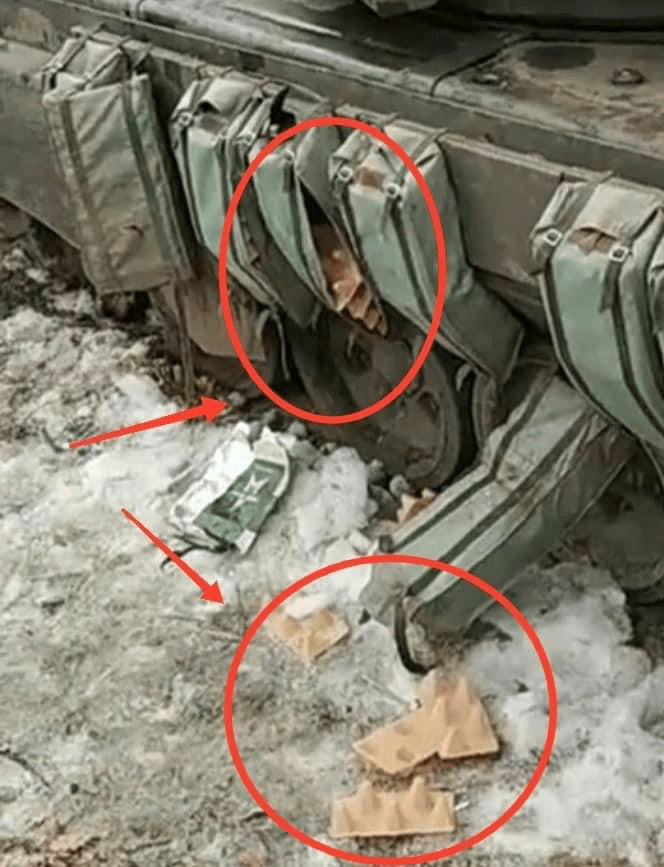
In the image example, you can see, Russian reactive armour kits which are supposed to contain a ceramic panel and composite material which increases protection against chemical munitions like anti-tank missiles have instead been filled with what appears to be egg cartons and cardboard. It is likely the Russian officer in charge of procuring the kits embezzled the money instead of buying what they were supposed to buy. This actively will and most likely has gotten Russian soldiers killed and makes the Russian army much weaker.
This is far from the only example of this type of corruption. Reports from Russian soldiers in the field on telegram and VK, a popular social media site in Eastern Europe, complain of other issues. Like night-vision systems being dummy systems that are often used in airsoft, cheap tires that are poorly maintained are being purchased for BTRs which are shredding in the field or even rims spinning in the wheels. Armoured vehicles have reportedly been stripped of all their non-essential components which most likely points to junior officers selling off the components for money to make up for the low pay they get.
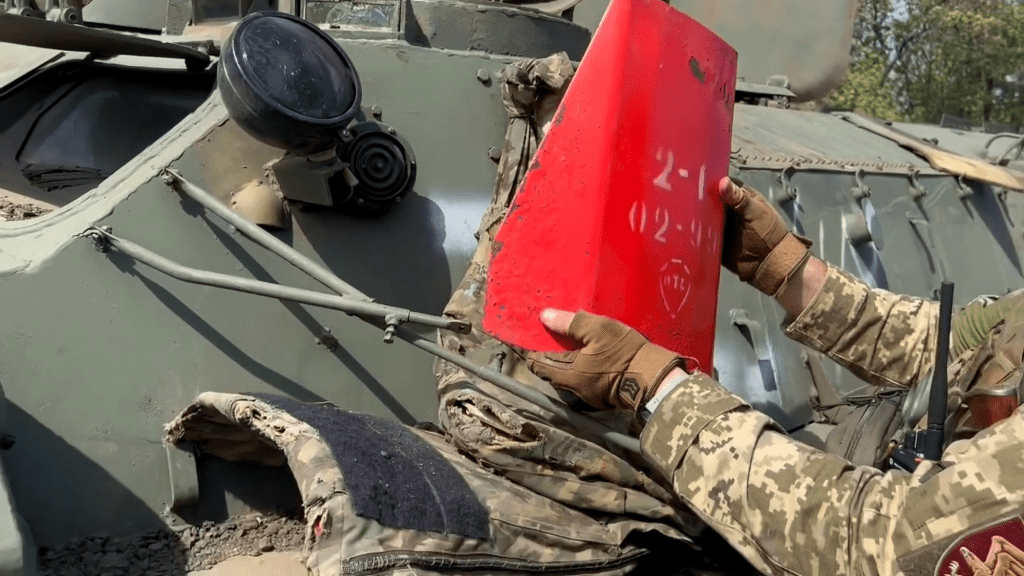
This extends to the personal protective gear being used in the field. In the image you can see on the right, Ukrainian paratroopers have cut open a Russian POW’s vest which appears to contain a makeshift metal plate. When tested by the paratroopers, it was insufficient protection not even stopping the 9mm pistol bullet they shot. Personal communication devices used by them require 3G/4G cellular signals rather than having UHF/VHF radios or satellite comms. The same signals which Russia itself jams to prevent operational security violations by Ukrainians in occupied regions. All of this comes together to present an army crippled by corruption among its officers.
Mediocrity of Dictatorships
One of the largest failings of a dictatorship like Vladimir Putin’s is that it breeds mediocrity. People are promoted purely because they tell the Kremlin elite what they want to hear rather than what they need to hear. This was laid bare early on in the war in an alleged Federal Security Service (FSB) dossier which suggested research teams were sent to Ukraine in December and January to find what the plausibility and difficulty of invading would be. They found it was unlikely an invasion could be completed quickly, that the Ukrainian military was equipped and prepared to fight both in terms of supplies and morale. However, this isn’t what the FSB senior agent wanted to report to Putin so instead, they told these field agents to produce a report that the Ukrainian army was unequipped for war, that the Ukrainian people wanted to join Russia and that the UA would simply surrender in face of the invasion.
A mediocre security service which is more inclined to say what gets them favour instead of what is correct directly led to the opening salvoes of this invasion and it would be a far shy from the end of this level of incompetence which has been allowed to fester in Putin’s government and all dictatorships that exist. In all aspects of the war thus far, the Russian army has displayed a unique ability to always make the most incompetent decision. Starting from only bringing 200,000 soldiers to invade the 2nd largest nation in Europe with an army twice the size of the planned invasion force and ending in the decision to mobilize a million reservists to send into a conflict in which you’ve already struggled to keep troops supplied.
It’s hard to pinpoint where exactly it’s going wrong for Russia as it’s hard to pinpoint where it’s going right. Whether limited successes that Russia has seen are strategic in nature or favourable happenstance is up for debate. It is clear that regardless of the pro-Russian spin and the spin of the government, the war has not gone to plan. Many Russian men are going home to their mothers and wives in a box and that’s assuming the effort is actually made by their comrades to recover their bodies. With winter coming quickly and hundreds of thousands of new men to send to the frontline, the existing shortcomings will continue to grow worse. With failures in logistics, theatre strategy, field command, operational security and morale. While Russia still has the theoretical power to win the war, it is unlikely they will be able to do so with their current rate of attrition.
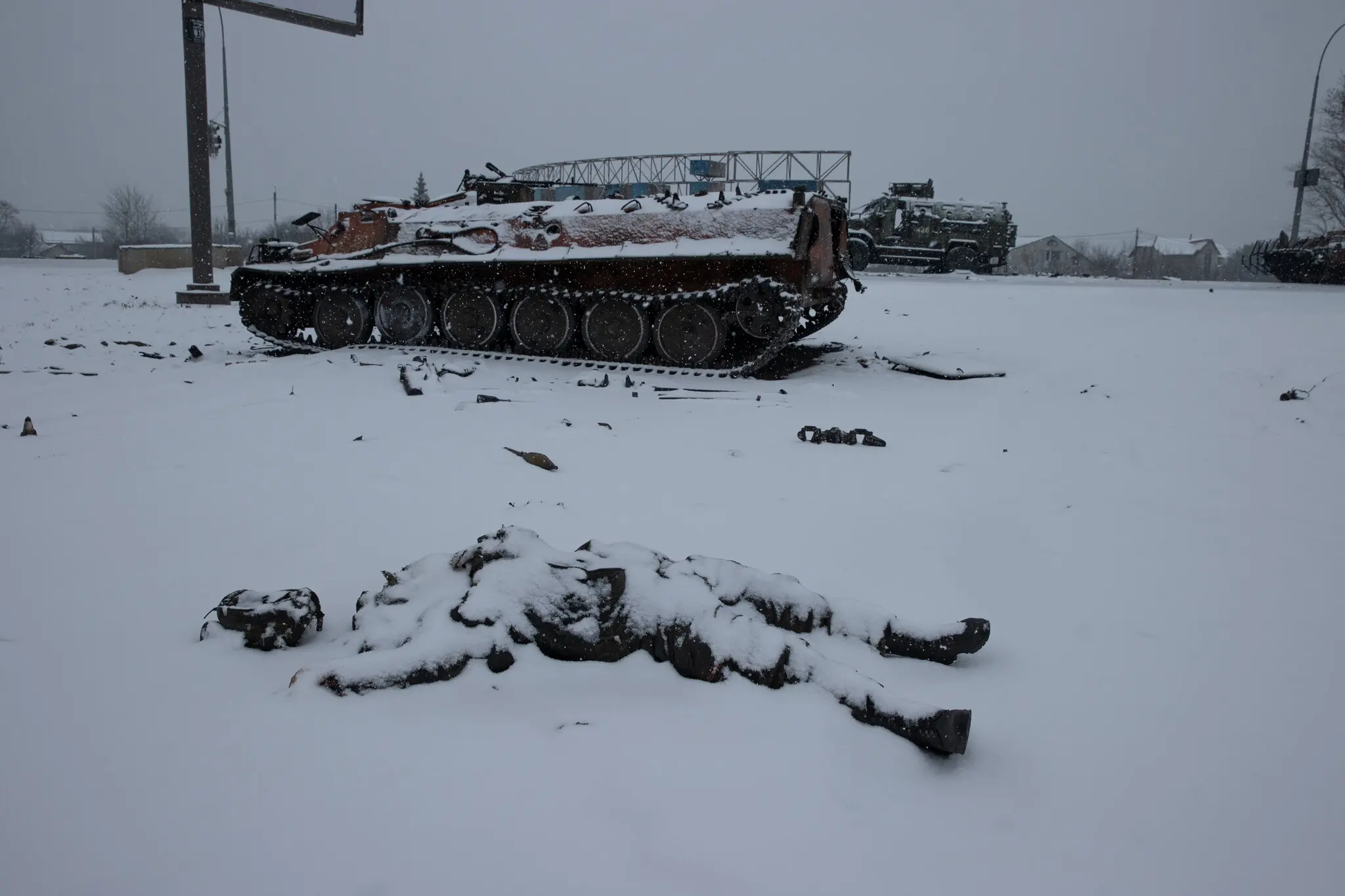
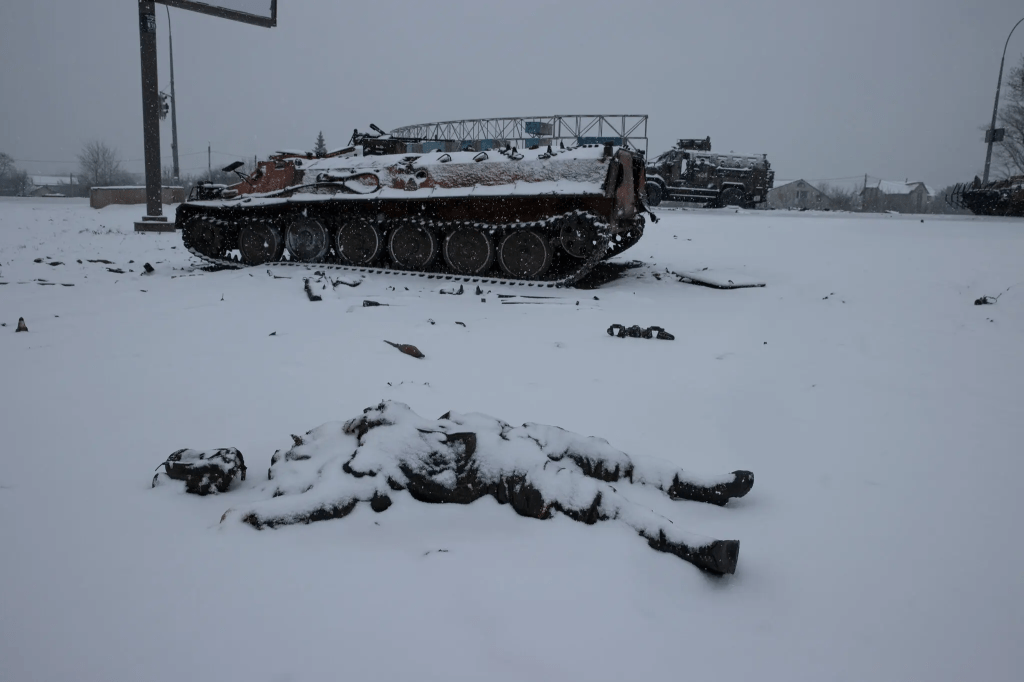
There has been an image that was striking to me when I saw it in February when the war began. A dead Russian soldier who died in the opening hours of the war was left behind by his comrades. That is the image I will leave you with here. A combination of corruption and institutionalized mediocrity is getting young men killed and an innocent nation destroyed for the geopolitical powers of a waning superpower and a nation which dreams of a past long gone.

 Layman's Terms